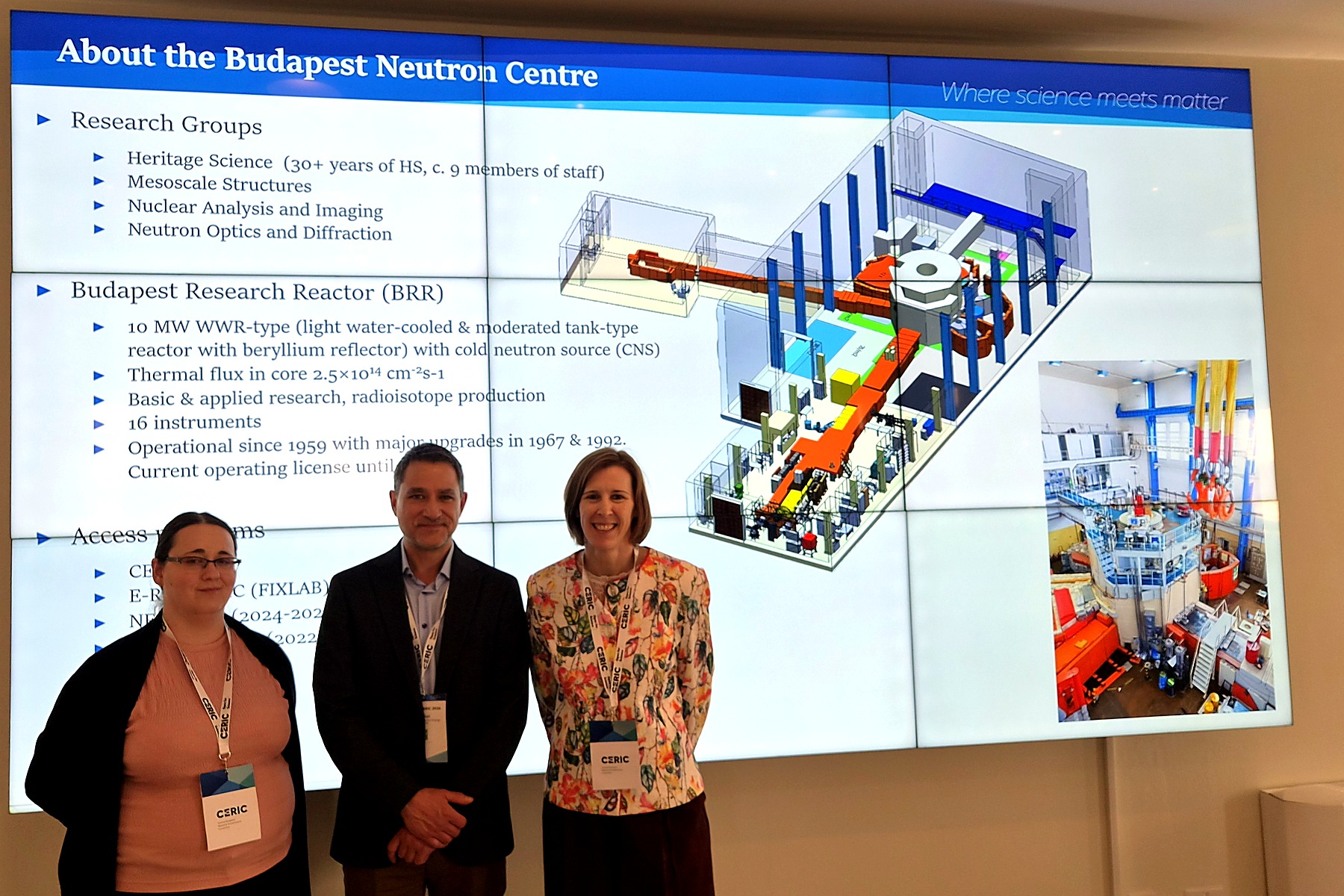
Three researchers of the Budapest Neutron Centre presented their work at Science@CERIC 2026, the biennial scientific meeting of CERIC-ERIC, held in Malta on 10–12 November 2026. Their talks in the Materials Science, Energy Materials and Cultural Heritage sessions showed how widely the neutron techniques available at BNC can be applied, and opened the door to new collaborations.
Science@CERIC brings together researchers, facility users and instrument scientists from across the CERIC community. This year’s programme was organised into five sessions: Food, Materials Science, Energy Materials, Cultural Heritage and Life Sciences. As a CERIC partner facility, BNC contributed to three of them.
Materials Science: what is inside e-waste?
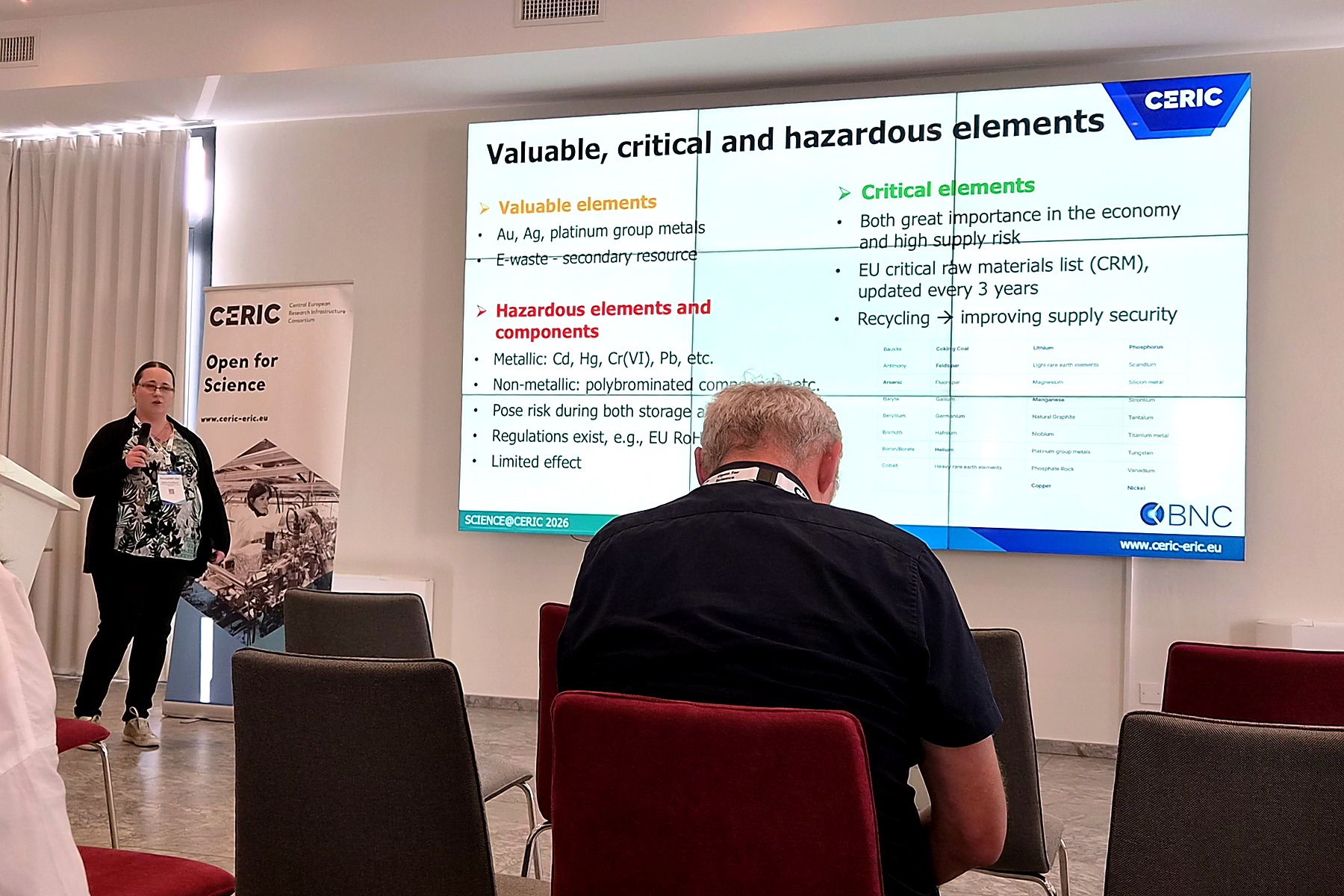
Noémi Anna Buczkó presented “Application of neutron-based analytical and imaging techniques in electronic waste characterization”. She showed how instrumental neutron activation analysis (INAA) and prompt gamma activation analysis (PGAA) can determine the elemental composition of common e-waste types, such as printed circuit boards and LEDs, directly on solid samples, without dissolving them. Combined with neutron and X-ray imaging, these methods also reveal the internal structure of intact items and the location of circular-economy-relevant elements, which supports their selective recovery and more efficient recycling.
Energy Materials: battery components in operation
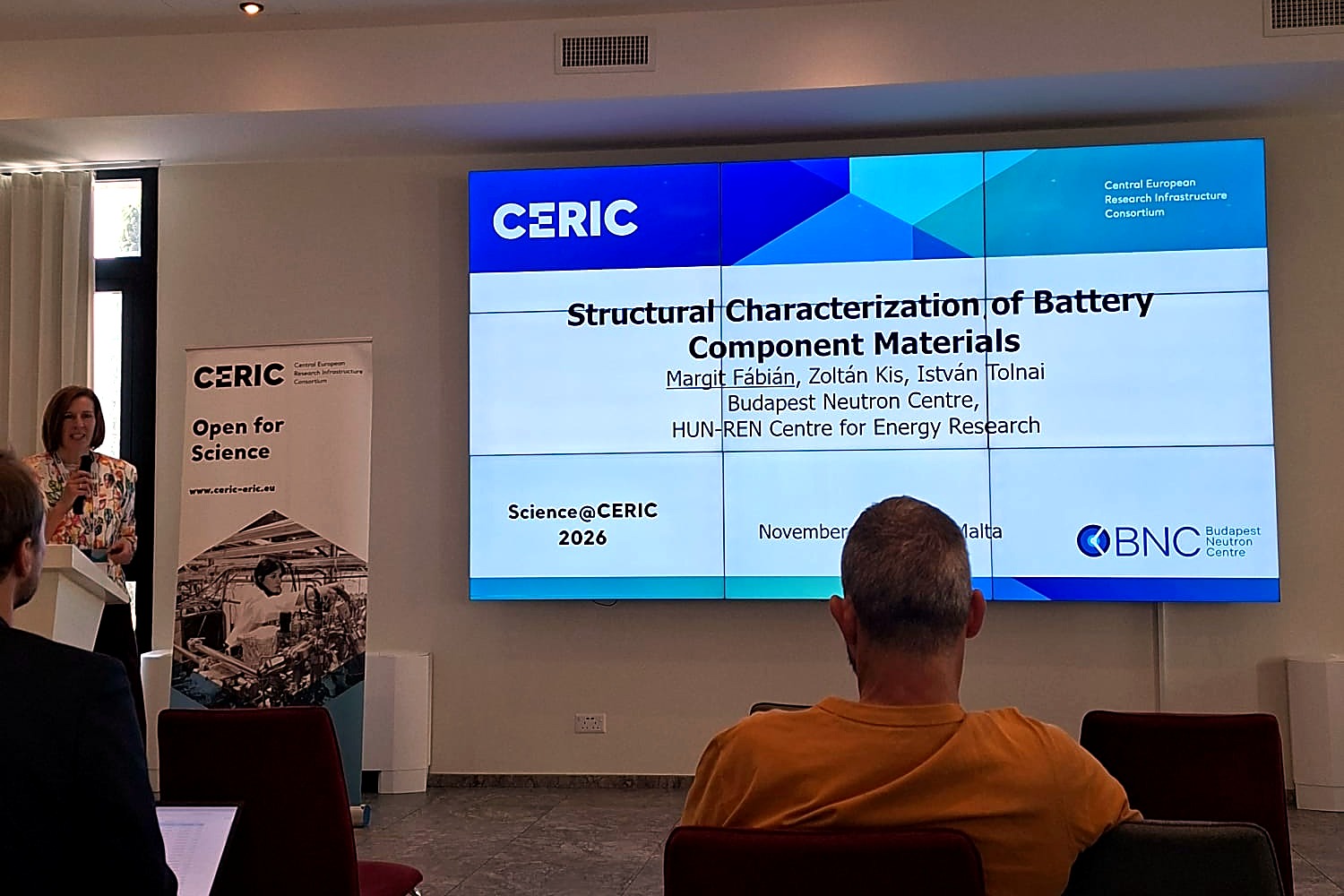
Margit Fábián gave the talk “Structural Characterization of Battery Component Materials” (co-authors: Zoltán Kis and István Tolnai). She presented neutron diffraction studies of lithium- and sodium-ion battery components, including measurements with an in-situ electrochemical cell placed directly in the neutron beam. These experiments follow the phases that form during charge and discharge under realistic operating conditions, a capability BNC also offers to its partners.
Cultural Heritage: how ancient pottery was made
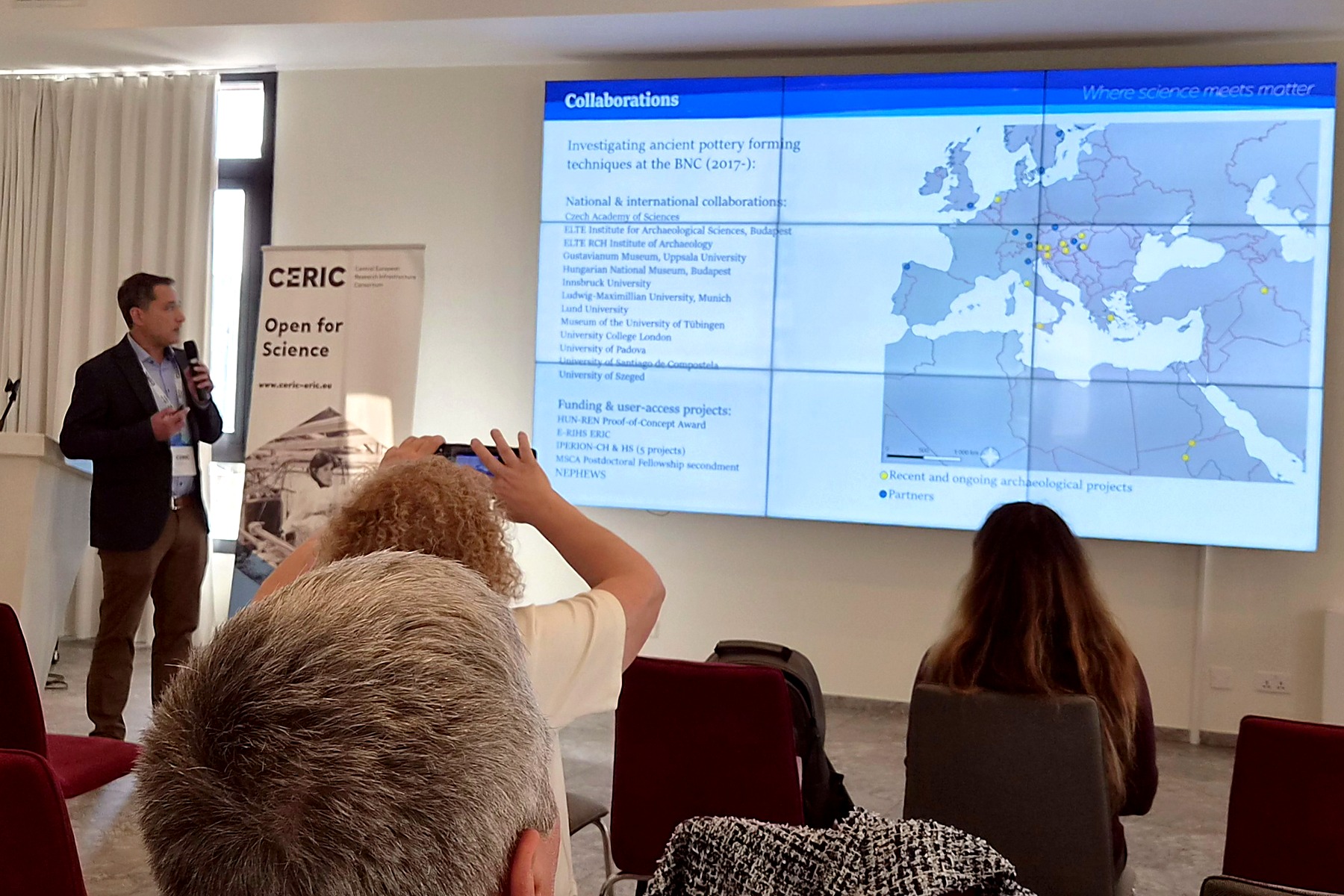
John Gait gave a keynote lecture, “Recent developments in the analysis of the forming techniques of ancient pottery using µCT and SANS”. He compared two non-destructive, quantitative approaches, X-ray microtomography and small-angle neutron scattering, that reveal whether a vessel was wheel-thrown, moulded or built from coils. He also pointed out that archaeology needs measurements on large numbers of everyday artefacts, which has consequences for instrumentation, data processing and user access programmes.
Looking ahead
We thank the organisers and everyone we met in Malta for the inspiring talks and discussions, and we look forward to turning them into new joint projects.
Interested in working with us? Access to the BNC instruments is open through CERIC and other user programmes.