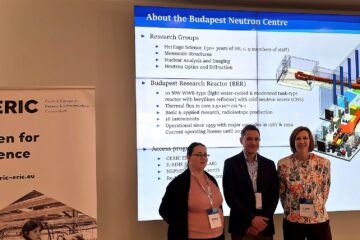
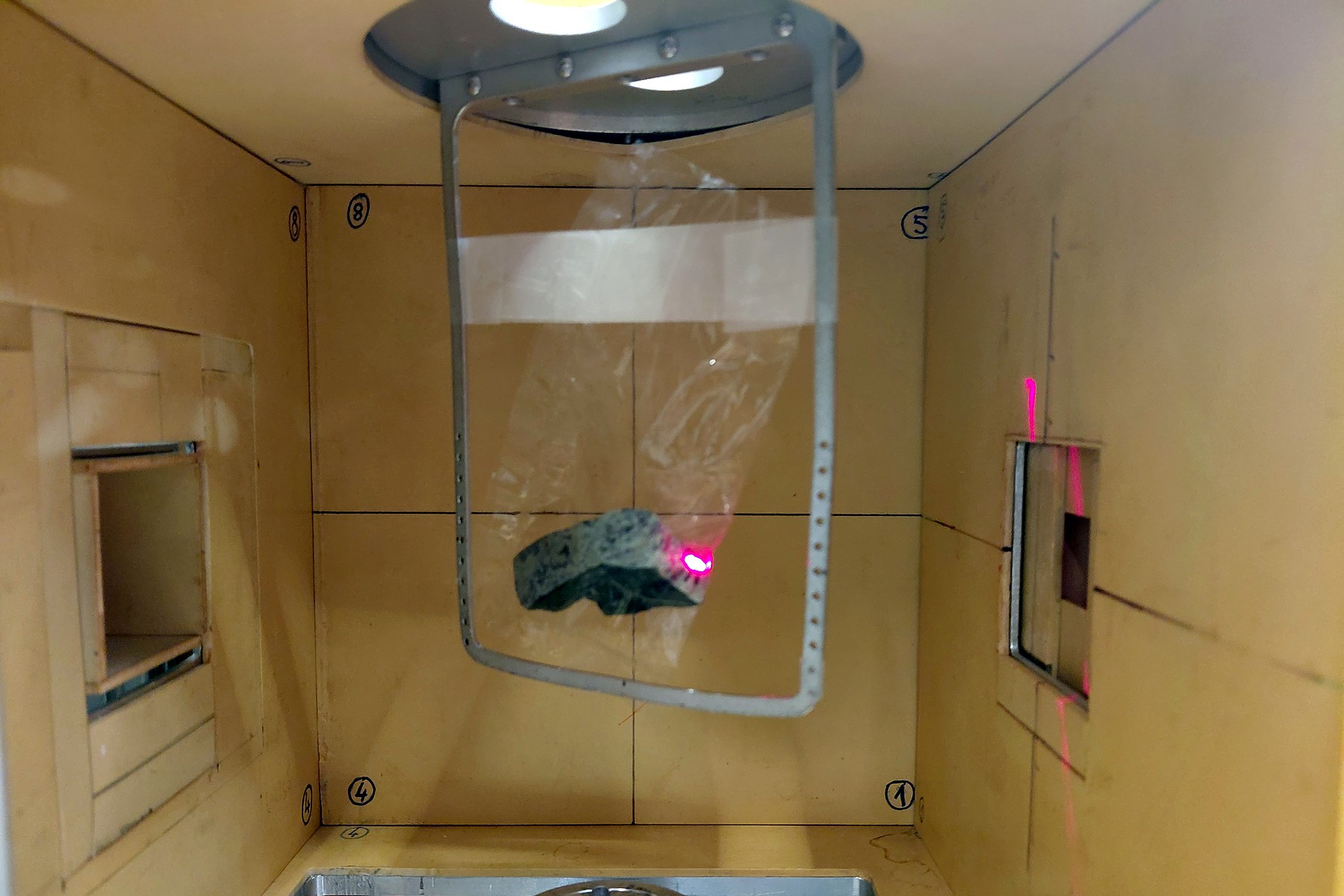
Anna Gajzer, an undergraduate student at the Lithosphere Fluid Research Lab of Eötvös Loránd University, carried out Prompt Gamma Activation Analysis (PGAA) measurements at the Budapest Neutron Centre on 9 November. Her visit was supported by the Twinning programme of the NEPHEWS project. Anna’s research is supervised by Csaba Szabó, PhD (Lithosphere Fluid Research Lab, ELTE), who joined her at BNC for the experiment, and Orsolya Gelencsér, PhD.
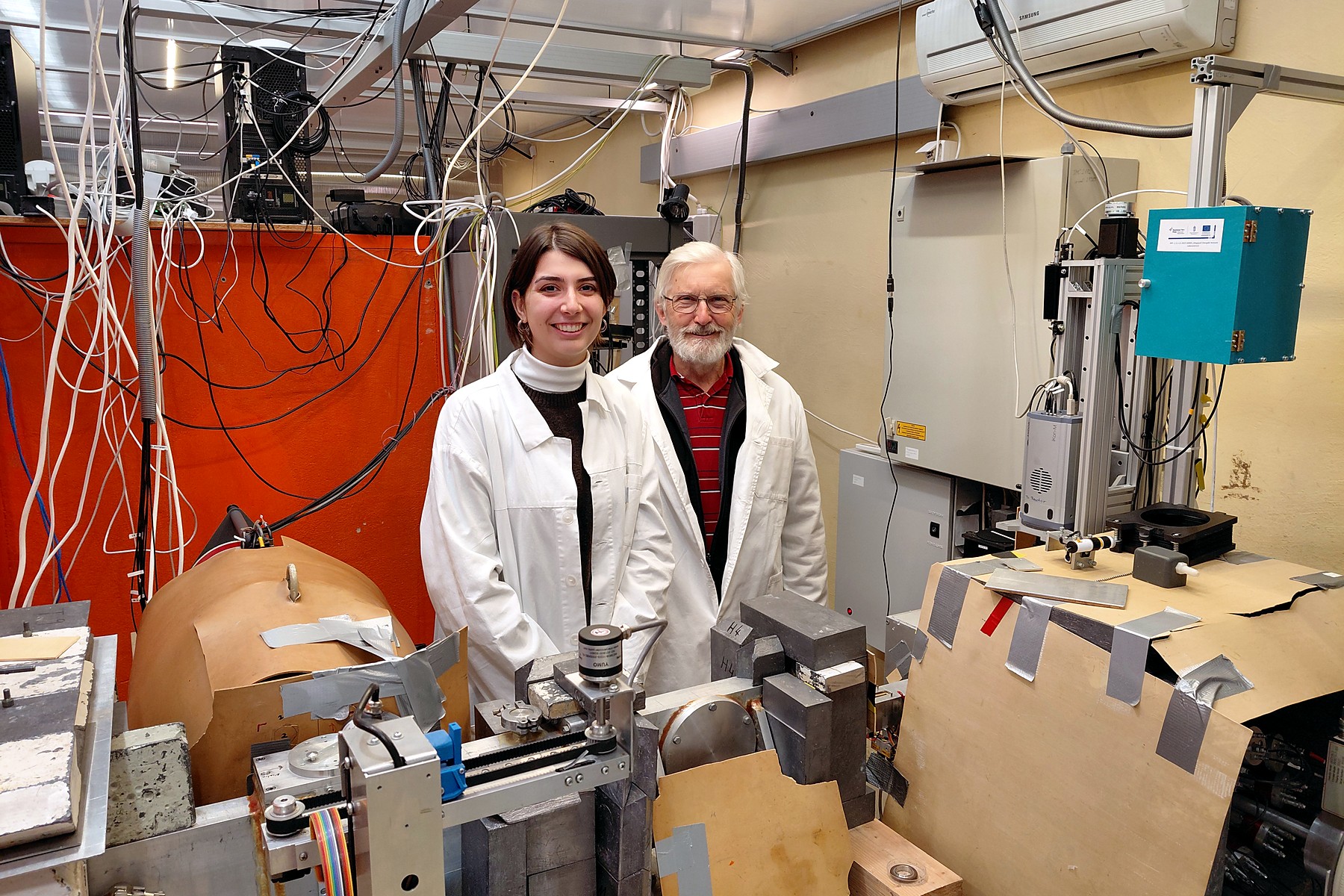
Anna’s research focuses on the Gyód serpentinite body, located beneath the surface in southern Transdanubia, on the southern side of the Mecsekalja Zone. Serpentinization of ultramafic rocks is the most important natural mechanism of molecular hydrogen generation. Natural hydrogen has become a major research topic in the search for sustainable, low-carbon energy sources over the past decade.
To understand how the Gyód serpentinite formed and evolved, and how it relates to nearby serpentinite bodies, Anna combines optical microscopy, Raman spectroscopy and PGAA. PGAA is especially well suited to the light and volatile elements boron and chlorine, which are key tracers of fluid–rock interaction. The results will provide the basis for quantitative estimates of the rock body’s hydrogen-generating potential. Anna plans to extend the study to other serpentinite bodies in the region, including those at Helesfa and Ófalu.
Anna’s earlier work on the Gyód and Helesfa serpentinites has already earned top poster awards at the 56th International Meeting of Young Geoscientists and at the 16th Assembly of Petrology and Geochemistry in Sopron.
The measurements were supported by Boglárka Maróti and Katalin Gméling.