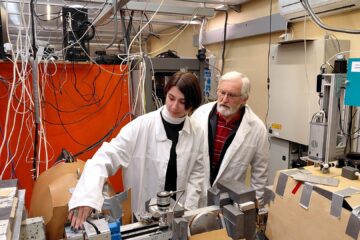
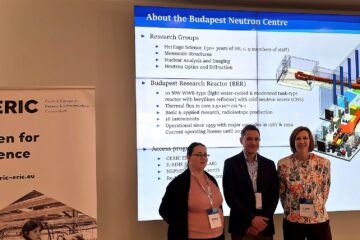
Carlos Vítor, a PhD student in Nuclear Technologies and Sciences at Instituto Superior Técnico (IST), University of Lisbon, visited the Budapest Neutron Centre from 12 to 16 October to carry out measurements under proposal BRR-804, supported by the NEPHEWS project. Carlos previously completed his MSc in Radiation Protection and Safety.
During the campaign he used two complementary techniques. Prompt Gamma Activation Analysis (PGAA) and Neutron Activation Analysis (NAA) together give both major and trace elemental compositions. He analysed a range of non-irradiated structural and shielding materials from the Portuguese Research Reactor: reactor concrete, cement, shielding materials, an Al–B4C alloy and steel.
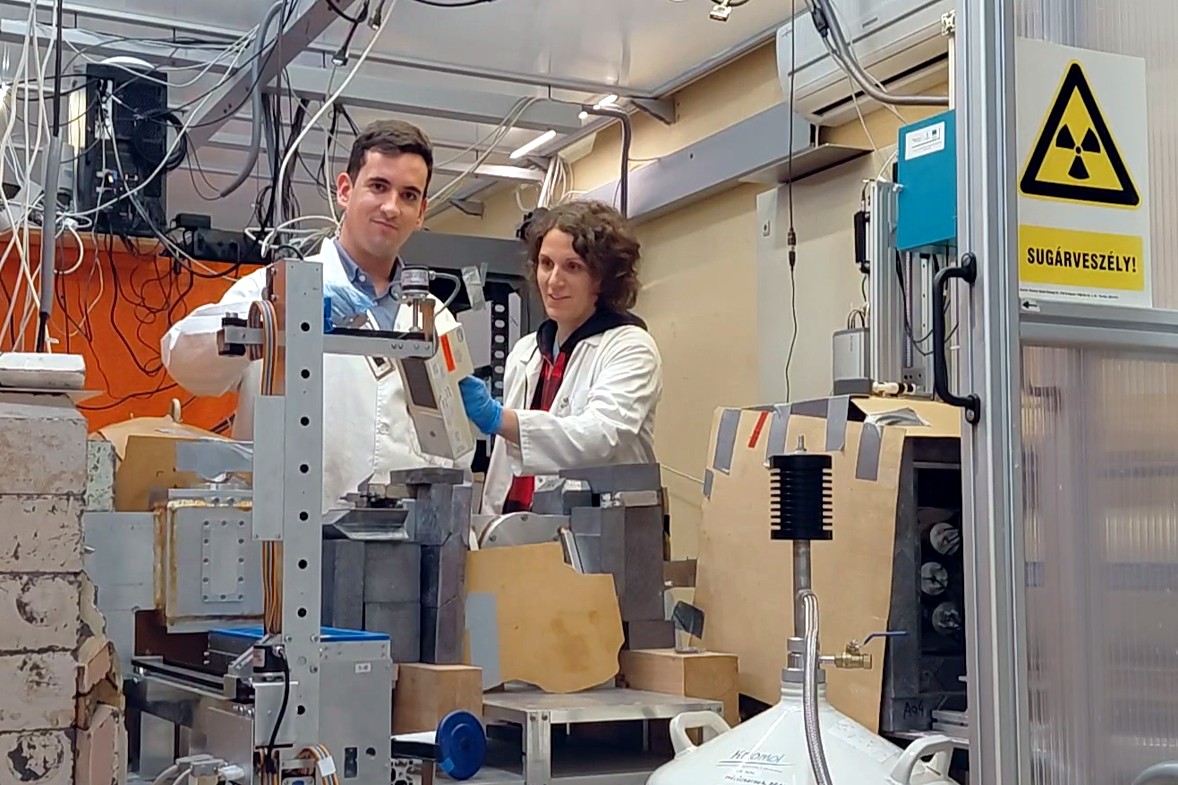
Knowing the exact elemental composition of these materials is essential for decommissioning. Trace elements such as cobalt or europium can dominate the long-term activity of irradiated concrete and steel. Carlos will use the measured data as input for simulations of neutron-induced activation, supporting the future radiological characterization of the reactor.
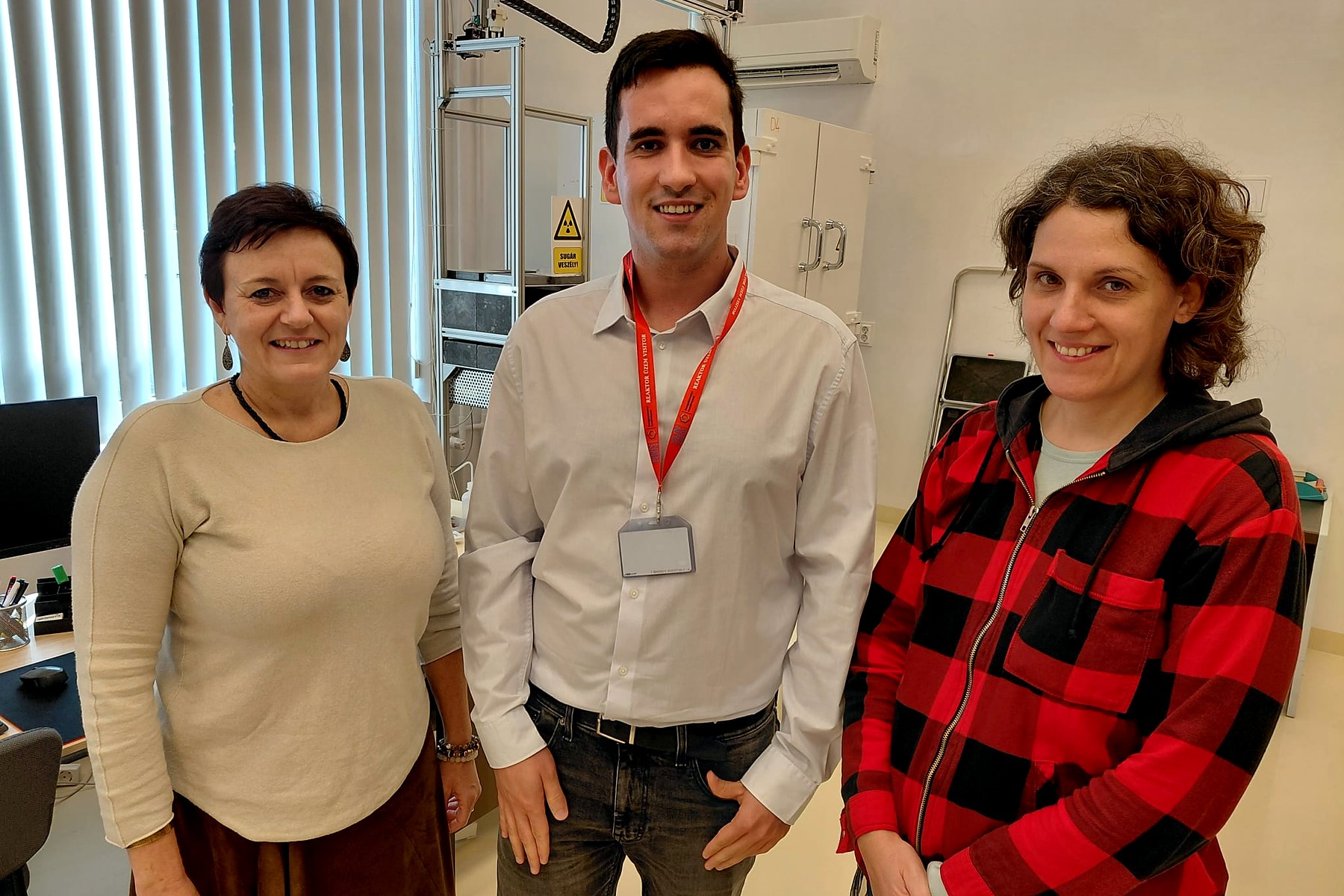
The measurements were supported by Katalin Gméling, Boglárka Maróti and Noémi Anna Buczkó of the BNC team.